31
Jul
What Should Distributors Check Before Importing a Container of HDPE Fittings
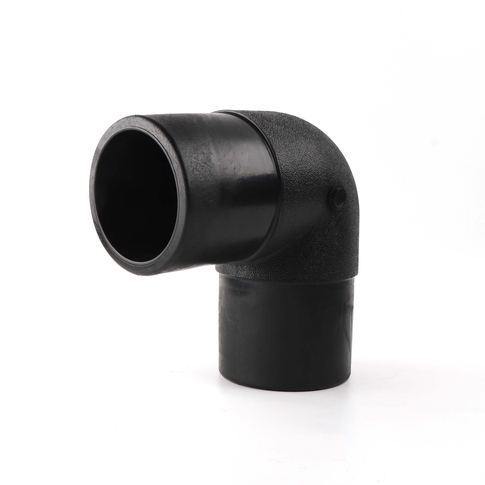
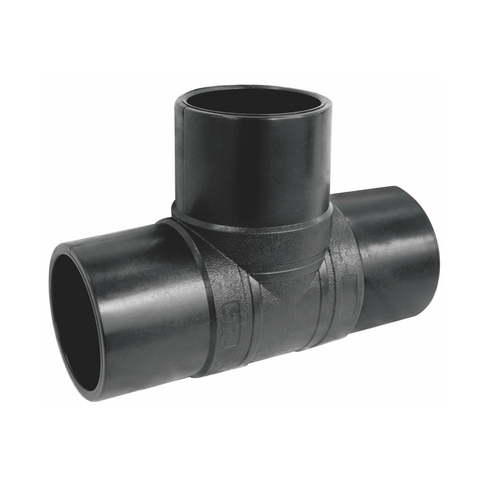
Importing HDPE fittings is not simply a matter of filling a container with elbows, tees and couplers. Before loading, a distributor should verify that every fitting matches the intended pipe system, joining method, project standard and documentation requirement. The key checks are dimension system, SDR/PN/DR or pressure class, fitting bill of materials, material and standard, joining equipment, certificate scope, inspection, packing and shipping documents.
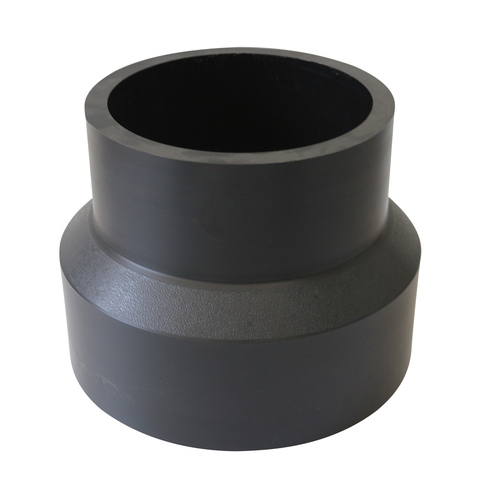
A fitting can look correct in a warehouse and still create an expensive problem at the project site. A reducer may not match the required pipe outside diameter; a fitting may be supplied for a different SDR series; or a shipment may arrive without the documents requested by the contractor. The resulting delay is rarely caused by one “bad fitting.” It is usually caused by an incomplete system check before the purchase order was released.
This guide gives distributors a practical HDPE fittings import checklist for evaluating an overseas supplier before a container is loaded.
1. Start with the pipeline system, not the fitting price
HDPE fittings are system components. Their suitability depends on the connected pipe, service medium, pressure requirement, joining method and project specification. A quotation based only on “elbows and tees” leaves too much room for mismatch.
Before asking for a price, define whether the order is for potable water, irrigation, gas, mining, fire protection, drainage or another application. Then identify the governing project standard and the pipe system already selected. A distributor who supplies multiple brands should also confirm whether the fittings are intended to connect with pipe already in stock or with pipe supplied in the same order.
| What to confirm | Why it matters before import | What to request from the supplier |
| Application and service medium | They influence the required material, pressure class, approvals and connection details. | Project application summary and required standard. |
| Pipe dimension system | Metric OD, DN and IPS/DR terminology cannot be assumed to be interchangeable. | Pipe OD, wall thickness, SDR/DR and drawings. |
| Pressure design | A fitting must be suitable for the required system pressure and pipe series. | Specified SDR, PN or DR and design conditions. |
| Joining method | Butt fusion, electrofusion and flanged connections require different fitting forms and site resources. | Jointing method, machine range and installation plan. |
| Full bill of materials | Small omissions can stop installation after the container arrives. | Itemized list with type, quantity, size, SDR/PN/DR and drawing reference. |
For a broader view of available system components, see Puhui’s HDPE pipe and fittings range.
2. Verify the dimension system before comparing unit prices
Dimension terminology is one of the easiest ways to create a costly compatibility error. A purchase order should state the actual pipe outside diameter and the relevant dimension system, not rely only on an informal size description.
For a metric project, confirm the fitting’s OD and the pipe’s SDR or PN series. For an IPS project, confirm the IPS size and DR requirement. If the order includes transitions, reducers, flange adapters or fabricated pieces, request a dimensional drawing and identify both connection ends separately.
Do not approve a quotation that lists only a nominal size where the connected pipe specification is unclear. The distributor should be able to trace every fitting line item back to a pipe size, wall series and connection type. Puhui’s HDPE pipe specification size table can be used as a starting reference; the final order must follow the applicable project specification.
3. Check SDR, PN or DR as a fitting-to-pipe compatibility question
SDR, PN and DR are not decorative details on a quotation. They help define the pipe series and pressure design that the fitting must suit. A buyer should not assume that every fitting with the same nominal diameter is appropriate for every pipe wall series.
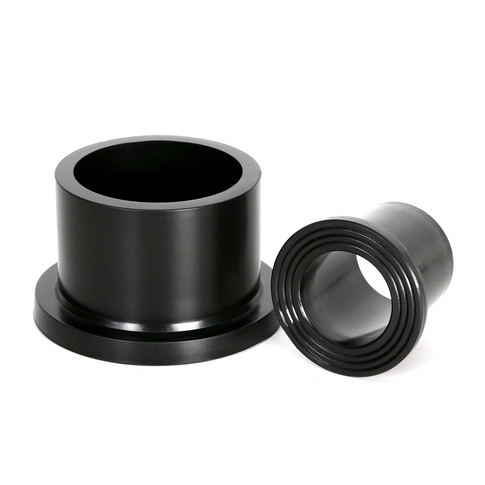
Ask the supplier to show the selected SDR, PN or DR for each fitting category and to identify any exceptions. This is particularly important for reducers, stub ends, flange connections, tapping saddles and fabricated fittings, where both ends or the branch connection may require separate confirmation.
- Record the pipe material and standard for the project.
- Record OD plus SDR/PN/DR for every connected pipe size.
- Check that each fitting line has a corresponding system rating.
- Ask for clarification where the quotation uses a different naming convention from the drawing or tender document.
4. Build a complete fitting bill of materials
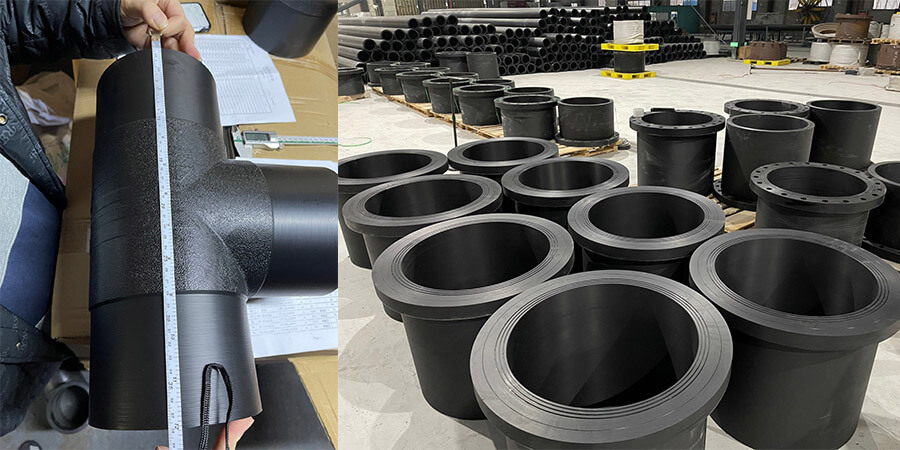
Container imports often fail at the detail level. The main elbows and tees are included, but the project later needs reducers, end caps, couplers, stub ends, backing rings, flange adapters, tapping saddles or repair components that were never included in the original count.
Create a line-by-line bill of materials before placing the order. Each line should state fitting type, size, connected pipe size, SDR/PN/DR where applicable, quantity, joining method, standard and drawing reference. Treat the bill of materials as a technical document, not only a commercial attachment.
Where a non-standard angle, large diameter or special branch arrangement is needed, request a drawing review before production. Fabricated HDPE fittings can address project-specific geometry, but their dimensions, pressure requirements and connection details must be agreed in writing before loading.
5. Match the fittings to the joining method and site capability
A fitting that is technically available may still be the wrong choice for the distributor’s customer if the site lacks compatible equipment, trained installers or space for the selected fusion procedure. Confirm the installation method during procurement, not after arrival.
| Connection approach | What the distributor should confirm | Relevant fitting range |
| Butt fusion | Compatible pipe and fitting dimensions, SDR/DR requirement, fusion machine range and site procedure. | HDPE butt fusion fittings |
| Electrofusion | Compatible electrofusion fittings, control unit, preparation tools, traceability requirements and installation instructions. | HDPE electrofusion fittings |
| Flanged or mechanical transition | Flange size, drilling pattern, stub end/backing ring arrangement, valve or equipment interface and bolt requirements. | Confirm the complete transition assembly, not only one component. |
Do not present one joining method as universally better. The appropriate method depends on pipe size, project standard, installation environment, equipment availability and the design of the complete pipeline.
6. Confirm applicable standards, certificates and documentation scope
Distributors should distinguish between a supplier having public certificates and a particular fitting line meeting every requirement of a specific project. The buyer should provide the tender, customer or market requirement, then request confirmation of the applicable product range and documents for that order.
Ask for the relevant product standard, material information, dimensional documentation, certificate copies where required, inspection requirements and labeling/traceability expectations. Do not use a certificate from one product family as automatic evidence for another fitting type, size or application.
Puhui’s public certification page lists certificate items for its pipe and fittings business. For an import order, confirm the applicable product range and documentation with the supplier before the purchase order is finalized.
7. Agree the inspection point before production and loading
Pre-shipment inspection is more useful when the acceptance criteria are agreed early. The purchase order should identify what needs to be checked: fitting type and count, dimensions, appearance, markings, packing, pallet condition, labels and required documents. If third-party inspection is required, define the timing and the release process before the cargo is booked.
For complex orders, use an approved sample, drawing or packing list as the reference. This gives the distributor, supplier and inspector one shared basis for checking the shipment. It also prevents a later dispute based on assumptions that were never written into the order.
8. Review packing and container loading as part of product protection
Fittings are smaller than pipes, but they can still be damaged, mixed or difficult to identify after a long shipment if packing is poorly organized. Verify how individual fitting types will be separated, labeled and protected; how cartons or pallets will be counted; and how the container will be loaded and secured.
- Ask for a packing list that matches the purchase order line by line.
- Confirm carton, pallet or bag labeling for size, type and quantity.
- Request photos of packed goods and container loading where this is part of your shipping control process.
- Confirm the loading plan when fittings are shipped with pipes, welding machines or other components.
- Agree the shipping terms, destination port, document set and responsibility for any required export packing marks before booking.
The lowest item price is not always the lowest import cost. A complete, clearly packed fitting shipment can reduce re-counting, site delays and urgent local purchases after arrival.
9. Use this pre-shipment checklist before releasing the container
A distributor can use the following questions as a final gate before authorizing loading:
- Does every fitting correspond to a confirmed pipe OD/DN/IPS size and SDR/PN/DR or pressure requirement?
- Does the bill of materials include all elbows, tees, reducers, couplers, caps, transition pieces and accessories required by the project?
- Is the selected joining method compatible with the fittings, pipes, machinery and site procedure?
- Are drawings approved for fabricated, customized or non-standard items?
- Are project standards, certificate requirements and document requirements written into the order?
- Has the applicable certificate or approval scope been confirmed for the relevant product range?
- Are markings, packaging, labels and packing-list format agreed?
- Are inspection timing, acceptance criteria and release responsibility clear?
- Are shipping terms, destination port and required shipping documents confirmed?
- Does the commercial invoice, packing list and final quantity match the approved purchase order?
Prepare a clearer HDPE fittings RFQ
A detailed RFQ lets a supplier check system compatibility before quoting, rather than simply pricing a list of part names. Send the following information when requesting an HDPE fittings quotation:
- Application and service medium
- Pipe material, governing standard and dimension system
- Pipe OD/DN/IPS plus SDR, PN or DR for each size
- Fitting schedule with type, size, quantity and drawing reference
- Required joining method and available installation equipment
- Certificate, inspection and project-document requirements
- Destination country/port, preferred shipping term and required arrival timeline
- Whether pipes, valves, flange components, welding machines or fabricated spools are required in the same shipment
Puhui can review an itemized fitting list alongside pipe dimensions and project requirements. Send the RFQ through the Puhui contact page with the information above, so the quotation can be prepared around the intended HDPE pipe system rather than a partial list of parts.
Frequently asked questions
♦ Can I import HDPE fittings without ordering HDPE pipe from the same supplier?
Yes, but provide the existing pipe’s material, standard, actual outside diameter and SDR/PN/DR or DR details. The supplier should confirm compatibility with that pipe system before the order is approved.
♦What is the most important information on an HDPE fittings purchase order?
The essential information is the complete fitting bill of materials, connected pipe specification, dimension system, SDR/PN/DR or pressure requirement, joining method, governing standard, quantity and document requirements.
♦Do HDPE fitting certificates automatically apply to every product and application?
No. Certificate and approval scope can depend on the product range, standard, size and application. Confirm the required scope with the supplier for the specific order.
♦Should a distributor inspect HDPE fittings before container loading?
For project-critical or complex orders, agree an inspection plan before production or loading. The plan should cover fitting type, dimensions, quantity, markings, packing and required documents.