
06
Jun
Above-Ground HDPE Mining Pipe for Temporary Water Pipelines
Above-ground HDPE pipe can be a practical choice for temporary water pipelines in mining projects, construction water transfer, dewatering support lines, and other high-UV outdoor applications. However, choosing the right pipe for surface installation is not the same as choosing a buried water pipe. Buyers need to review not only diameter and pressure class, but also sunlight exposure, support conditions, thermal movement, fittings, and project handling requirements.
This guide is written for project buyers, engineers, contractors, and distributors who need to evaluate whether an above-ground temporary water pipeline is suitable for exposed-service conditions. It focuses on real procurement decisions rather than generic product claims.
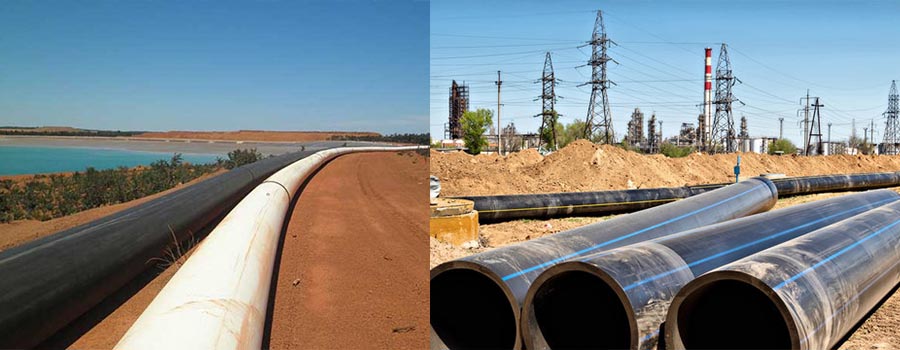
Why Above-Ground HDPE Pipe Is Used in Temporary Water Projects
Mining and temporary water projects often need fast deployment, route flexibility, and lower corrosion risk than metal systems. In many cases, the pipeline may stay on the surface for a temporary campaign, a phased expansion, or a water-transfer line that will later be moved or reconfigured.
Compared with rigid and corrosion-sensitive alternatives, HDPE is often considered because it can help project teams use longer pipe runs, adapt to uneven routes more easily, and connect pipe, fittings, and fabricated sections into a practical temporary system.
What Makes Above-Ground Installation Different
When a pipeline is installed above ground, it is directly affected by sunlight, ambient temperature swings, physical supports, wind exposure, vehicle crossing points, and maintenance access. A surface pipeline may also be more exposed to impact, movement, and operational changes than a buried line.
- Service duration: short-term movable lines and longer exposed-service lines may need different support and joining plans.
- UV and temperature: strong solar exposure changes the selection conversation.
- Route condition: slopes, haul roads, work pads, and unstable ground can affect system design.
- System hardware: supports, anchor points, bends, and fittings are part of the decision.
For this reason, an above-ground temporary water pipeline should be reviewed as a system, not only as a pipe material purchase.
When White Co-Extruded HDPE Pipe Can Be Worth Considering
For high-sunlight and above-ground applications, buyers may review white co-extruded HDPE pipe in addition to conventional black pipe. In project discussions, the white outer layer is often considered when buyers want to manage exposed-service conditions more carefully while still using HDPE for water transfer and industrial applications.
The key point is not color by itself. The buyer should ask how the pipe structure, installation method, and operating conditions fit the actual project. In mining and temporary water systems, the exposed-service decision should be based on the full application, not on appearance alone.
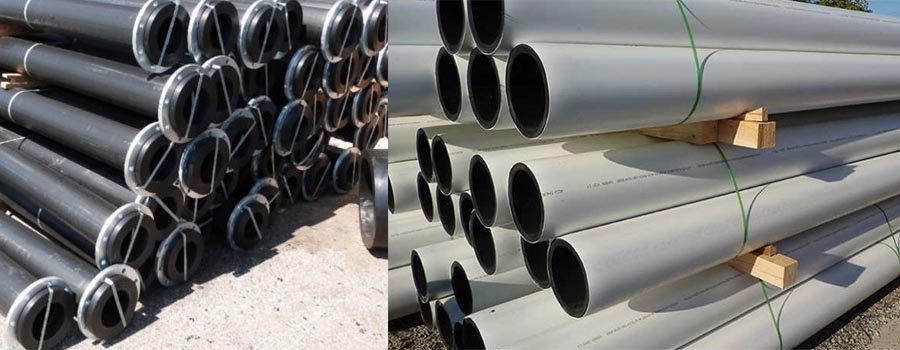
Key Selection Factors for Mining and High-UV Projects
♦ Application And Service Duration
Start with the real use case. Temporary water pipelines in mining may support process water, dewatering, dust suppression, camp water transfer, emergency bypasses, or phased civil works. A short-term movable line and a longer exposed-service line may require different handling, support, and connection planning.
♦ Pressure Class And Operating Conditions
Do not request above-ground HDPE pipe by diameter alone. Confirm the working pressure, surge condition, route elevation, and project standard together with the pipe size. The HDPE water pipe size chart and HDPE pipe specification size table can help buyers check OD, wall thickness, SDR or DR, and fitting compatibility together.
♦ UV Exposure And Site Temperature
In open-pit mines, desert projects, and other high-UV regions, surface-installed pipe may face strong solar exposure for long periods. Buyers should review how the selected pipe structure and service layout will perform under those exposed conditions, especially when the line is expected to remain above ground for extended use.
♦ Thermal Movement And Surface Routing
Above-ground pipelines can expand and contract more visibly than buried lines. That means supports, guide points, directional changes, and connection details need to be reviewed with the actual route. Long straight runs, steep grades, and restrained connection points deserve extra attention before procurement.
♦ Supports, Anchoring, And Crossings
A temporary water line is not only a pipe order. The system may also need support blocks, sleepers, cradles, anchor points, expansion accommodation, or crossing protection depending on the route. Buyers should confirm whether the supplier needs to provide only pipe, or pipe plus fittings, fabricated sections, and joining equipment.
♦ Joining Method And Fittings
Butt fusion, electrofusion, flange connections, and fabricated fittings should be selected based on project assembly and maintenance needs. If the line may be relocated or partially dismantled later, the joining approach and fitting package should reflect that reality. Buyers can continue evaluation through the HDPE joining methods guide, HDPE electrofusion fittings, and HDPE welding machine pages.
Buyer Checklist Before Sending an RFQ
| RFQ field | What to confirm |
|---|---|
| Application | Temporary water transfer, dewatering, dust suppression, process water, or construction support |
| Installation condition | Above ground, partially supported, portable, or semi-permanent exposed service |
| Pipe size | OD, DN, or inch size required |
| Pressure requirement | PN, SDR or DR, working pressure, and any known surge condition |
| Pipe structure | Conventional HDPE or white co-extruded HDPE if exposed-service conditions are a concern |
| Route details | Approximate length, slopes, bends, haul road crossings, and support conditions |
| Fittings | Elbows, tees, reducers, flange adapters, fabricated sections, valves, or transition parts |
| Joining plan | Butt fusion, electrofusion, flange assembly, or mixed method |
| Documents | Datasheet, product markings, applicable certificate scope, and inspection expectations |
| Destination | Country, climate context, and project timeline |
Common Mistakes Buyers Should Avoid
- Treating an above-ground line like a standard buried water pipe. Surface installation usually needs a more complete review of route, support, thermal movement, and operating conditions.
- Asking only for “white HDPE pipe price.” For mining and temporary water projects, price-only inquiries usually produce weak quotations.
- Focusing only on pipe and ignoring system hardware. For above-ground service, fittings, supports, and joining plans matter.
- Assuming one document covers every product scope. If project approvals or inspection files are needed, confirm the exact applicable range before submission.
This topic works best as a supporting article that guides readers into the white co-extruded HDPE pipe page, the HDPE water pipe page, and the mining piping system category.
FAQ About Above-Ground HDPE Pipe for Temporary Water Pipelines
♦ Is above-ground HDPE pipe suitable for temporary water pipelines?
It can be suitable when the pipe specification, exposed-service conditions, support layout, and joining method are reviewed together. Buyers should confirm route, pressure, UV exposure, and system hardware before ordering.
♦ Why do mining projects consider white co-extruded HDPE pipe?
Mining and high-sunlight projects may consider white co-extruded HDPE pipe when the pipeline will stay above ground and exposed to strong sunlight. The selection should still be based on the full project requirement, not on color alone.
♦ What is the most important information in an RFQ for above-ground HDPE pipe?
The most useful RFQ information includes application, pipe size, pressure class, exposed-service condition, approximate route, fittings, joining method, destination, and document requirements.
♦ Should temporary water pipeline buyers request fittings and joining equipment together with the pipe?
In many cases, yes. Above-ground temporary systems often perform better when the buyer reviews pipe, fittings, joining method, and support concept as one package rather than as separate purchases.
RFQ CTA: If your project needs above-ground HDPE pipe for temporary water transfer, send the pipe size, pressure class, route condition, support condition, fittings list, destination country, and timeline. A clearer RFQ helps the supplier recommend a more suitable pipe structure and quotation package for mining and high-UV projects.