
02
Nov
What Pipe Materials Should Be Used for Drip Irrigation Mainlines and Drip Tape?
Conclusion first:
In a drip irrigation system, the mainline and sub-main must use pressure-rated HDPE (or PVC) pipe. The terminal drip tape (or dripline) must use dedicated thin-wall LDPE/LLDPE drip tape. These two categories have completely different functions, pressure ratings, wall thicknesses and service lives. Mixing them up is the most common and costly mistake in drip system design.
Why the Distinction Matters
Many projects fail because pressure pipe is used as drip tape or thin drip tape is used as a mainline. The result is either high material cost with no benefit, frequent bursting, uneven watering, or early system failure. Understanding the clear functional difference between pressure distribution pipes and emitter lines is the first step to a reliable, cost-effective system.
The Three Levels of Pipe in a Drip System
-
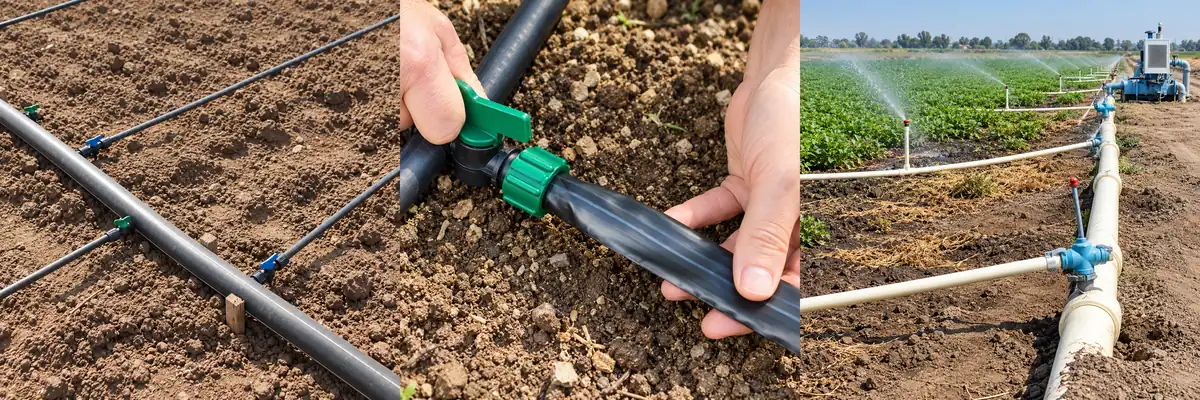
Mainline (trunk / dry pipe)
Carries water from the pump or source over longer distances under higher pressure and larger flow. It is the “artery” of the system.
-
Sub-main (branch pipe)
Distributes water from the mainline to individual irrigation zones or blocks. Pressure and flow are medium.
-
Drip tape / dripline (lateral / emitter line)
The final thin-wall tube laid along the crop rows that actually delivers water drop by drop through built-in emitters. Working pressure is low (typically 0.5–1.5 bar).
These three levels cannot be interchanged.
Recommended Materials for Mainline and Sub-main (Pressure Pipes)
Preferred choice: HDPE (PE100) pipe
- Excellent flexibility and impact resistance
- Strong resistance to freezing, ground movement and water hammer
- Reliable fusion joints (butt or electrofusion)
- Long design life (50 years under proper conditions)
- Ideal for buried installation, sloping or uneven terrain, and fertigation systems
Alternative: PVC-U pipe
- Lower initial cost and rigid shape
- Fast solvent-weld installation
- Suitable for flat, stable ground and shorter fixed buried runs with moderate pressure
Pressure rating guidance
Mainlines are commonly selected in the PN6–PN10 (or higher) range depending on pump pressure, elevation and required safety margin. Always size the pipe by actual internal diameter and design flow so that friction loss stays acceptable.
Recommended Materials for Terminal Drip Tape / Dripline
Standard choice for most field crops: Thin-wall LDPE or LLDPE drip tape
- Wall thickness typically 0.15–0.40 mm
- Flat when empty, low cost, easy to lay
- Designed for one to three growing seasons
- Best for annual row crops (vegetables, cotton, maize, etc.)
Longer-life option: Thicker-walled dripline (round drip pipe)
- Wall thickness 0.6–1.2 mm or more
- Better mechanical strength and clogging resistance
- Service life of 5–10 years or longer
- Preferred for orchards, vineyards and permanent plantings
Never use HDPE or PVC pressure pipe as the emitter line — it is far more expensive and cannot deliver the precise low-flow drip pattern required.
Quick Comparison Table
| Pipe Level | Recommended Material | Typical Pressure | Wall Thickness | Service Life | Main Function |
| Mainline | HDPE (PE100) or PVC-U | Medium–High | Thick | 20–50 years | Long-distance pressure delivery |
| Sub-main | HDPE or PVC-U | Medium | Thick | 20–50 years | Zone distribution |
| Drip tape / lateral | Thin-wall LDPE/LLDPE tape or thicker dripline | Low (0.5–1.5 bar) | Very thin to medium | 1–10 years | Precise crop watering |
Common Mistakes to Avoid
- Using pressure pipe as drip tape (unnecessary cost, no drip function)
- Using drip tape as a mainline (insufficient pressure rating → bursting)
- Choosing mainline diameter by outer diameter only, ignoring actual internal diameter and friction loss
- Ignoring water quality and filtration, which quickly clog drip tape
- Selecting rigid PVC on sloping or frost-prone ground where HDPE flexibility is needed
Practical Selection Advice
- Large annual field crops → HDPE or PVC mainline + thin-wall drip tape
- Orchards and perennial crops → HDPE mainline + thicker dripline
- Hilly, frost or settlement-prone areas → Prefer HDPE mainline
- Flat, stable, budget-sensitive projects → PVC mainline can be acceptable
- Always match pipe diameter to design flow and keep velocity in the economic range
Summary
Correct material selection is simple once the functions are clear:
Pressure pipes (HDPE or PVC) for mainlines and sub-mains; dedicated thin-wall drip tape or dripline for the crop rows.
Matching the right material to each level delivers reliable pressure, uniform watering and the lowest long-term cost.
If you share your planted area, crop type, terrain, water source pressure and preferred system life, we can recommend the exact pipe diameters, pressure classes and drip-tape specifications free of charge and provide a quotation.
Contact Puhui Industry at https://www.phhdpepipe.com for professional sizing support and product data.
Frequently Asked Questions
Must the mainline always be HDPE?
No. PVC is acceptable on flat, stable ground with moderate pressure. HDPE is preferred for flexibility, longevity and difficult terrain.
What is the difference between drip tape and dripline?
Drip tape is thin-walled and usually flat; dripline is thicker-walled and round. Tape is cheaper for seasonal crops; dripline lasts longer for permanent plantings.
How do I choose the pressure rating for the mainline?
Select a rating higher than the maximum working pressure of the system, including a safety margin for water hammer and elevation.
How long does drip tape normally last?
Thin-wall tape typically lasts 1–3 seasons. Thicker dripline can last 5–10 years or more with good filtration and proper management.
Does fertigation change the pipe material choice?
HDPE is highly compatible with most fertilizers. Ensure the drip tape emitters are also rated for the chemicals used.