04
Jun
HDPE Water Pipe Size Chart: SDR, PN, OD and Wall Thickness Guide
Choosing an HDPE water pipe size is not just a matter of picking a diameter from a table. For a potable water line, municipal distribution network, industrial water system, or underground water main, the buyer also needs to confirm the pressure class, SDR or DR, wall thickness, material grade, project standard, fittings, and required documentation.
This guide explains how to read an HDPE water pipe size chart and how to turn the chart into a practical RFQ checklist. It is written for engineers, contractors, distributors, and procurement teams who need to compare pipe options before requesting a quotation.
What An HDPE Water Pipe Size Chart Usually Shows
Most HDPE water pipe size charts are built around several core dimensions and ratings:
| Item | What it means | Why buyers should check it |
|---|---|---|
| OD | Outside diameter of the pipe | Used for pipe sizing, fittings, joining equipment, and many international standards |
| Wall thickness | Thickness of the pipe wall | Affects pressure capacity, flow area, handling, and pipe weight |
| SDR or DR | Standard dimension ratio, usually OD divided by wall thickness | Helps identify pressure class and structural strength |
| PN or pressure rating | Nominal pressure class under specified conditions | Helps match the pipe to the operating pressure of the water system |
| Material grade | Commonly PE100 or PE4710, depending on market and standard | Affects pressure rating, standard compliance, and project acceptance |
| Standard | Such as ISO 4427, EN 12201, AWWA C906, ASTM F714, or project-specific requirements | Determines dimensions, testing, marking, and documentation expectations |
For procurement, the chart is useful only when it is tied to a real project requirement. A pipe with the same OD can have different wall thicknesses, pressure ratings, and flow capacities depending on the SDR or DR.
OD, ID And Wall Thickness: The First Size Decision
HDPE pipe is often specified by outside diameter. The outside diameter helps determine compatibility with fittings, butt fusion equipment, electrofusion fittings, flange adapters, valves, and other components in the pipeline system.
The inside diameter is affected by wall thickness. When the wall is thicker, the inside flow area becomes smaller. This matters for water transmission projects where flow rate, pressure loss, pump design, and hydraulic calculations need to be reviewed.
For this reason, a buyer should avoid sending an RFQ that only says “HDPE water pipe 160 mm” or “HDPE pipe 6 inch.” A stronger RFQ should include the standard, SDR or pressure class, quantity, fittings, and application.
What SDR Means In HDPE Water Pipe
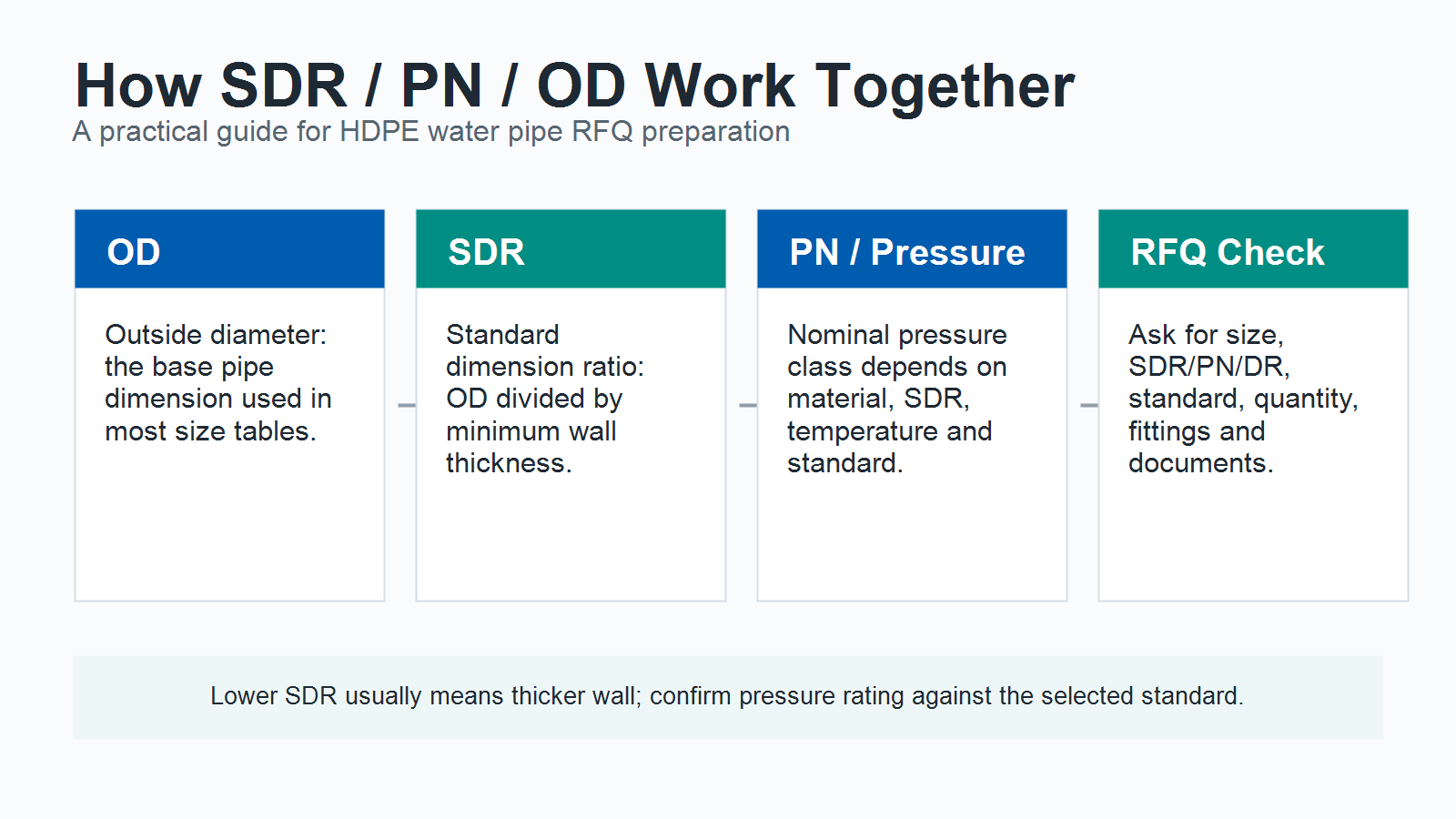
SDR means standard dimension ratio. In simple terms: SDR = pipe outside diameter / minimum wall thickness A lower SDR usually means a thicker pipe wall. For example, SDR 11 pipe has a thicker wall than SDR 17 pipe of the same outside diameter. However, SDR alone should not be treated as the full pressure rating.
The final pressure class also depends on the material grade, selected standard, operating temperature, design coefficient, and project conditions. Common water supply discussions may include SDR 11, SDR 13.6, SDR 17, SDR 21, or other project-specific options.
The right choice should follow engineering design, not only a general online chart.
PN, DR And Pressure Rating
PN is commonly used in many international water supply projects to describe nominal pressure class. DR is often used in markets that follow different specification systems, including North American project language. SDR and DR are closely related terms, but the exact pressure rating must be checked against the applicable standard and material grade.
When comparing HDPE water pipe pressure rating, buyers should check:
- normal operating pressure;
- surge or transient pressure;
- water temperature;
- buried depth and external load conditions;
- installation method;
- jointing method;
- project standard and acceptance rules;
- required test pressure and inspection documents.
This is especially important for municipal water supply networks, industrial water transfer lines, and long-distance buried pipelines where pressure surges can affect long-term performance.
Common Standards Buyers Mention For HDPE Water Pipe
Different markets may use different standards and project specifications. Common references for HDPE water pipe or polyethylene pressure pipe can include ISO 4427, EN 12201, AWWA C906, ASTM F714, and other local or project-specific requirements.
The standard affects more than the table format. It can influence dimensions, pressure class, material designation, marking, testing, quality documents, and acceptance conditions. Before confirming an order, buyers should make sure the requested standard matches the tender document or project drawing.
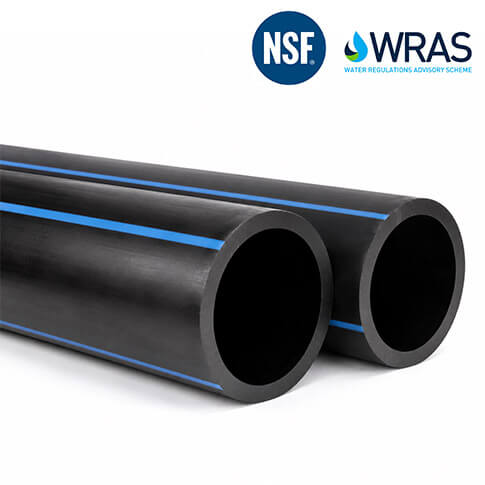
If certificate or approval documents are required, the applicable product range should be confirmed before publication, quotation, or submission. Available documentation can depend on product type, size, pressure class, standard, and destination market.
How To Use A Size Chart For Potable Water Projects
For potable water applications, the size chart should be used together with water safety, pressure, and documentation requirements. A good review process includes:
- Confirm the application: potable water distribution, municipal main, service line, treatment plant, or industrial water supply.
- Confirm the design basis: required flow rate, pressure, laying condition, operating temperature, and expected service environment.
- Confirm the standard: ISO, EN, AWWA, ASTM, or the project owner’s specification.
- Select OD and pressure class: check SDR, PN or DR, wall thickness, and approximate inside diameter.
- Match fittings and joining method: butt fusion, electrofusion, flange connection, fabricated fittings, or transition fittings.
- Request documents: product datasheet, applicable certificate scope, test report, inspection record, marking details, and packing information.
This approach helps avoid the common mistake of selecting pipe size based only on nominal diameter while ignoring pressure rating and fittings.
HDPE Water Pipe Size Chart RFQ Checklist
When sending an inquiry, include the following information whenever possible:
| RFQ field | Example of what to provide |
|---|---|
| Pipe application | Potable water supply, municipal water main, industrial water transfer |
| Size | OD, nominal size, or inch size required by the project |
| SDR / PN / DR | SDR 11, SDR 17, PN16, DR11, or the project-specified rating |
| Standard | ISO 4427, EN 12201, AWWA C906, ASTM F714, or tender specification |
| Material grade | PE100, PE4710, or project-required material designation |
| Quantity | Total meters, container quantity, or phased delivery quantity |
| Fittings | Elbows, tees, reducers, flange adapters, electrofusion fittings, or fabricated spools |
| Documents | Certificate requirements, datasheet, test report, inspection documents |
| Destination | Country, port, project location, or delivery condition |
| Timeline | Tender deadline, expected shipment window, or project schedule |
For Puhui-related project inquiries, buyers can also ask the sales team to confirm which product range and documentation apply to the required pipe size, pressure class, and destination market.
Useful Internal Links
- HDPE water pipe product page
- HDPE pipe specification and size table
- High density polyethylene pipe overview
- IPS PE4710 / ASTM pipe page
Common Mistakes When Reading HDPE Water Pipe Size Charts
One common mistake is treating OD as the only size. In reality, OD, wall thickness, SDR, and pressure rating work together. Another mistake is comparing prices without matching specifications. A thicker-wall pipe and a thinner-wall pipe may look similar in a short product name, but they can have different material use, pressure class, weight, and application fit.
A third mistake is assuming that one certificate or document applies to every pipe size and pressure class. Certificate applicability should always be confirmed for the specific product range and project requirement.
Conclusion: A Size Chart Is A Starting Point, Not The Final Specification
An HDPE water pipe size chart helps buyers compare OD, wall thickness, SDR, PN, and pressure class, but it should not replace the project specification. The right pipe selection depends on application, pressure, standard, installation method, fittings, documents, and destination market requirements.
If you are preparing an RFQ for HDPE water pipe, include the pipe size, SDR/PN/DR, standard, quantity, fittings, destination country, certificate or document requirements, and project timeline. This helps the supplier check the correct product range and provide a more accurate quotation.
FAQ
? What is the most important item in an HDPE water pipe size chart?
The most important item depends on the project, but buyers should usually check OD, wall thickness, SDR or DR, pressure class, material grade, and standard together. A diameter alone is not enough for procurement.
? Does a lower SDR mean a stronger HDPE pipe?
A lower SDR usually means a thicker wall for the same OD, but the correct pressure rating must be checked against the selected material grade, standard, operating temperature, and project design.
? Can HDPE pipe be used for potable water?
HDPE pipe is widely used in potable and municipal water supply projects when the product, material, standard, and required documents match the project specification. Buyers should confirm applicable approvals and certificate scope for the exact product range.
? What should I include in an RFQ for HDPE water pipe?
Include application, size, SDR/PN/DR, standard, material grade, quantity, fittings, destination country, document requirements, and timeline. If available, attach the project drawing or tender specification.
? Is PN the same as SDR?
No. SDR describes the ratio between outside diameter and wall thickness. PN refers to a nominal pressure class under specified conditions. They are related, but they are not the same thing.